

The Nervous System
Understanding the Nervous System (in a simple, grounded way)
The nervous system is the body’s main communication and control network.
It connects the brain, spine, and body, constantly sending and receiving information that determines how you move, feel, heal, and function.
Every heartbeat, breath, muscle movement, digestive process, hormone response, and emotional reaction is regulated by the nervous system — often without you being aware of it.
Most importantly, it decides whether your body is in survival mode or healing mode.
An easy way to think about it
The nervous system works like a combination of:
a control centre
a communication network
and an alarm system
Brain → the control centre
Spinal cord & nerves → the communication pathways
Stress response → the alarm system
When the system is working well:
Messages move clearly between brain and body
The alarm activates only when needed
The body can shift easily between activity and rest
When it’s under strain:
Signals become less clear
The alarm stays switched on
The body struggles to fully relax or recover
The two main states of the nervous system
From a physiological perspective, the nervous system operates in two primary modes:
Survival / Stress Response (Sympathetic)
Heightened alertness
Increased muscle tension
Energy directed toward protection, not repair
Rest, Repair & Regulation (Parasympathetic)
Supports digestion, immunity, healing, and sleep
Allows tissues and systems to recover
Promotes calm, clarity, and resilience
A healthy nervous system can move fluidly between these states.
Problems arise when the system becomes stuck in survival mode.
What places the nervous system under strain
The nervous system doesn’t differentiate well between physical and emotional threat.
Things like:
Chronic stress or overwork
Injury or physical strain
Trauma or long-term emotional pressure
Poor rest or recovery
can all signal “danger” to the body.
Whether it’s a physical injury, ongoing stress, or emotional overwhelm, the nervous system often responds in the same way — by staying on high alert.
How long-term survival mode affects the body
When the nervous system remains in a protective state for too long:
Repair and healing are reduced
Slower recovery
Persistent pain or tension
Fatigue
Hormonal regulation can be disrupted
Elevated stress hormones
Blood sugar instability
Thyroid or adrenal strain
Digestion and immunity may suffer
Gut discomfort
Inflammation
Frequent illness
Mood and cognitive function can change
Anxiety or low mood
Brain fog
Irritability
These responses are not signs of weakness — they are normal biological adaptations to perceived threat.
The key point people often miss
Symptoms are not the problem — they are signals.
They are the body’s way of saying:
“I don’t feel safe enough to function optimally.”
Pushing through or suppressing symptoms often keeps the system in survival mode.
Why nervous system–focused care matters
The body cannot fully heal while it feels unsafe and is under constant
Supporting the nervous system helps:
Reduce protective tension patterns
Restore clearer communication between brain and body
Shift the system out of survival mode
Re-establish the conditions needed for repair and regulation
This is why nervous system–based approaches focus less on forcing change, and more on creating the conditions for the body to heal itself.
How Spinal Flow and Spinal Torsion fit in
Spinal Flow and spinal torsion techniques work with the spine — the central pathway of the nervous system.
By gently addressing tension, restriction, and stored stress, these approaches aim to:
Improve neural communication
Reduce interference within the nervous system
Encourage parasympathetic (healing) states
Support the release of long-held physical and neurological stress
Rather than forcing outcomes, the work supports the body’s innate ability to reorganise, regulate, and restore balance over time.
A simple takeaway
The nervous system determines whether the body is in survival or healing — and it can’t do both at the same time.
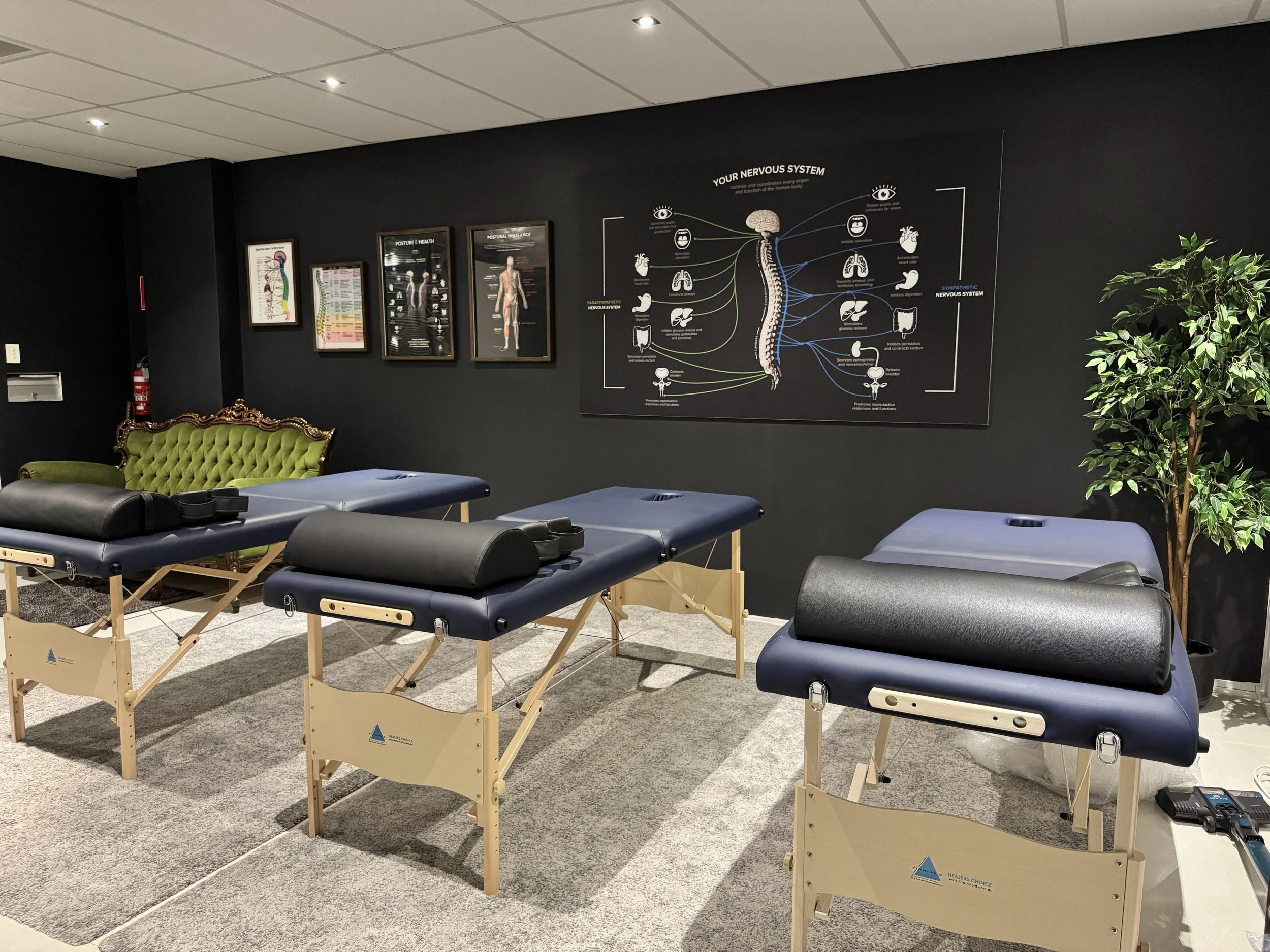
The Role of the Nervous System in Health
The nervous system is the primary regulatory system of the body.
It integrates sensory information, coordinates movement, modulates pain, and governs stress responses, immune activity, digestion, and sleep.
At all times, the nervous system assesses one key question:
Is the body safe?
The answer to this question determines whether the body prioritises protection or repair.
Autonomic Regulation: Protection vs Recovery
The autonomic nervous system operates through two complementary pathways:
Sympathetic Nervous System (Protection)
Increases muscle tone and alertness
Heightens pain sensitivity
Suppresses digestion and repair processes
This response is essential in short-term stress, but becomes problematic when chronically activated.
Parasympathetic Nervous System (Recovery)
Supports tissue repair and immune function
Promotes digestive efficiency and sleep quality
Reduces excessive muscle tension and pain signalling
Health depends on the ability to shift between these states, rather than remaining fixed in one.
When the Nervous System Becomes Dysregulated
Persistent stressors — physical, emotional, or environmental — can lead to altered nervous system regulation.
This may present as:
Chronic or recurrent pain
Ongoing muscle tension or stiffness
Fatigue despite rest
Heightened anxiety or emotional reactivity
Difficulty relaxing or “switching off”
These patterns reflect adaptive physiological responses, not dysfunction or failure.
Why Nervous System–Focused Care Is Effective
The body cannot override its own protective responses through willpower alone.
Supporting the nervous system can:
Reduce excessive protective signalling
Improve sensory and motor integration
Enhance spinal and neural communication
Facilitate a shift toward parasympathetic dominance
This creates an internal environment where healing processes can resume.
Our Clinical Approach
At The Nervous System Studio, care is centred on the spine — the central conduit of the nervous system.
Through gentle spinal-based interventions, we aim to:
Decrease neural interference
Improve sensory input to the nervous system
Support self-regulation and adaptability
This approach respects the body’s inherent capacity to restore balance when given appropriate input and support.